

Dexus Tests Modular Fitouts as Office Market Shifts

Dexus is trialling a modular fitout model across a number of its most prominent office addresses as it responds to structural shifts in the market.
While conditions remain challenging, the office market is showing early signs of recovery.
But longer leasing cycles, elevated vacancy and changing tenant demands and expectations are reshaping how office space is delivered and occupied.
Tenants are placing greater emphasis on flexibility, sustainability and cost control, at a time when capital constraints are tightening.
Those pressures have exposed inefficiencies in traditional fitout models, which typically involve bespoke interiors and office plans, long lead times and full strip-outs at the end of each lease, Dexus executive general manager for office Andy Collins said.
“Covid didn’t create those trends, but it exposed the inefficiencies of traditional fitout models built around long lead times, bespoke tenant capital and repeated strip‑outs,” Collins said.
In response, Dexus developed its Forever fitout model, a landlord-led approach that considers office interiors as reusable infrastructure rather than single-use installations.
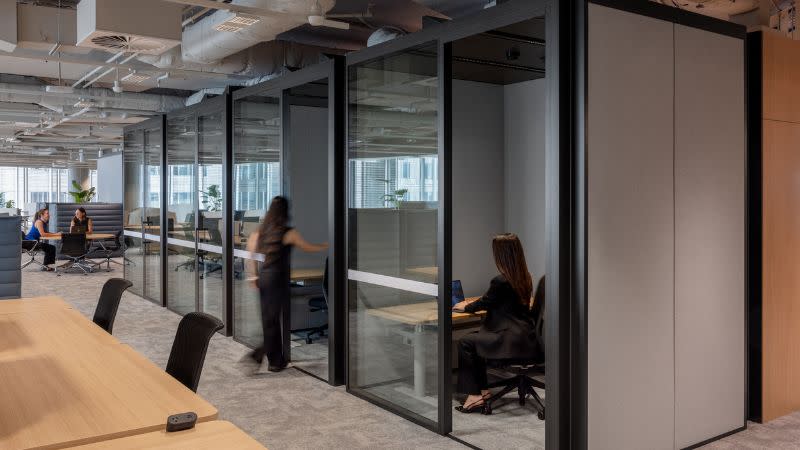
The model centres on modular components that can be retained and reconfigured across tenancies, including work stations, meeting rooms, collaboration zones, modular joinery, partitions and finishes.
“For several years, Dexus had seen a growing gap between how offices were delivered and what tenants increasingly wanted,” Collins said.
In response, pilot projects are now underway at some of Dexus’s most prominent office assets, including 1 Bligh Street and 25 Martin Place in Sydney, 80 Collins Street in Melbourne and 1 Eagle Street in Brisbane. And it’s not just single floors.
According to Dexus, the approach can reduce fitout delivery times from three to six months to as little as six to eight weeks, cutting vacancy downtime between tenants.
The shift reflects longer-term changes in the office market, including a “flight-to-quality” that has concentrated demand for higher-grade office assets with strong sustainability, wellbeing and amenity credentials.
“More broadly, the model reflects a shift from static leasing toward a “space‑as‑a‑service” approach, where landlords take greater responsibility for delivering adaptable, long‑life workplace solutions,” Collins said.
Office sustainability
The approach also targets the environmental impact of office fitouts, a growing focus for landlords and tenants.
Traditional office fitouts embed around 200kg of carbon per square metre, according to Dexus, and that is repeated each time an office changes hands.
Dexus’s first Forever fitout at 1 Bligh Street achieved a 5 Star Green Star GBCA fitouts certification.
And commercial fitouts can account for up to 40 per cent of a building’s lifecycle emissions, Dexus said.
With mandatory Scope 3 reporting approaching in 2027, businesses will need to account for these emissions.
“Forever fitout doesn’t eliminate upfront embodied carbon, but it reduces emissions over time by extending the life of interior components and avoiding repeated demolition and rebuild cycles,” Collins said.

Density Takes Centre Stage in Perth’s Great Urban Reset

Unloved Buildings Untapped Opportunity in Australia’s Cost Crunch

Death to the Basement: Cost, Time, Demand Drive Underground Parking Rethink

Marina Mirage Pivotal Moment for Gold Coast’s Luxury Future: Fraser


